TERA Sensor

Clean Rooms and Giga Factories

Real time particle counting for Clean Room safety

In industrial environments, particularly Clean Rooms, fine particle airborne presence can significantly compromise process quality, product conformity and personal safety.

The rapid growth of the Electric Vehicle (EV) market and the construction of battery “Giga Factories” brings with it a major challenge: To minimise the risks associated with Particle Matter (PM) contamination and improve battery quality, the requirement of Clean Room Production is essential.

Highlights

TERA Sensor - SensorSafyrOPC

Calibrated to ISO 21501-4 and supplied with an individual calibration certificate, it ensures traceable measurements of airborne particles from 0.3 to 10 µm for cGMP compliance, ISO 14644 standards and continuous Clean Room monitoring.

TERA Sensor - SafyrOPC

Combining the SensorSafyrOPC Optical Particle Counter (ISO 21501-4 calibrated) and a LoRa Gateway the SafyrOPC allows Teams to regularly perform fast and reliable self-checks in line with regulatory requirements providing continuous and compliant monitoring for cGMP facilities and ISO 14644 environments reducing downtime, costs and compliance risks.

TERA Sensor - PMDuct

Designed for integration into air handling units (AHUs/CTAs) and ventilation ducts, PMDuct enables operators to track filter performance, detect clogging, prioritise maintenance cycles and optomise energy comsumption.

Giga Factories

TERA Sensor - SensorSafyrOPC and SafyrPOC

There are inherent risks in manufacturing Li-ion batteries. The materials used react with oxygen and humidity, generating explosive gases such as Hydrogen and dangerous gases such as Hydrogen Fluoride further the use of toxic metals, notably powder form cobalt, represents a danger to workers and the environment.

Clean Rooms

TERA Sensor - SensorSafyrOPC and SafyrOPC

Clean Rooms are specialised environments designed to maintain extremely low levels of airborne particulates, pollutants and contaminants. These controlled environments are critical in sectors such as Pharmaceuticals, Biotechnology, Semiconductor, Space and Medical Device manufacturing. Accurate Particulate counting is vital as even the smallest deviation in Air Quality can compromise Product Integrity and Safety.

Gas Sensor Solutions SA's image

SensorSafyrOPC

SensorSafyrOPC is a high-precision Optical Particle Counter (OPC) OEM Module designed for:

> Clean Rooms
> Laboratories
> Controlled Environments
> EV Battery Production

Gas Sensor Solutions SA's image

SafyrOPC

SafyrOPC is a Complete Packaged Instrument that is either a Portable or Fixed and is a ready-to-use solution for real-time particle monitoring in:

> Clean Rooms
> Laminar Flow Hoods
> Biosafety cabinets
> EV Battery Production

Gas Sensor Solutions SA's image

PMDuct

PMDuct is a Complete Packaged Instrument for In-Duct monitoring of Particulate matter (PM10, PM2.5, PM1.0) in HVAC and clean air systems.

> Packaged Instrument
> PM10, PM2.5, PM1.0
> Dual Angle Detection
> Humidity Shield
> Course particle filter
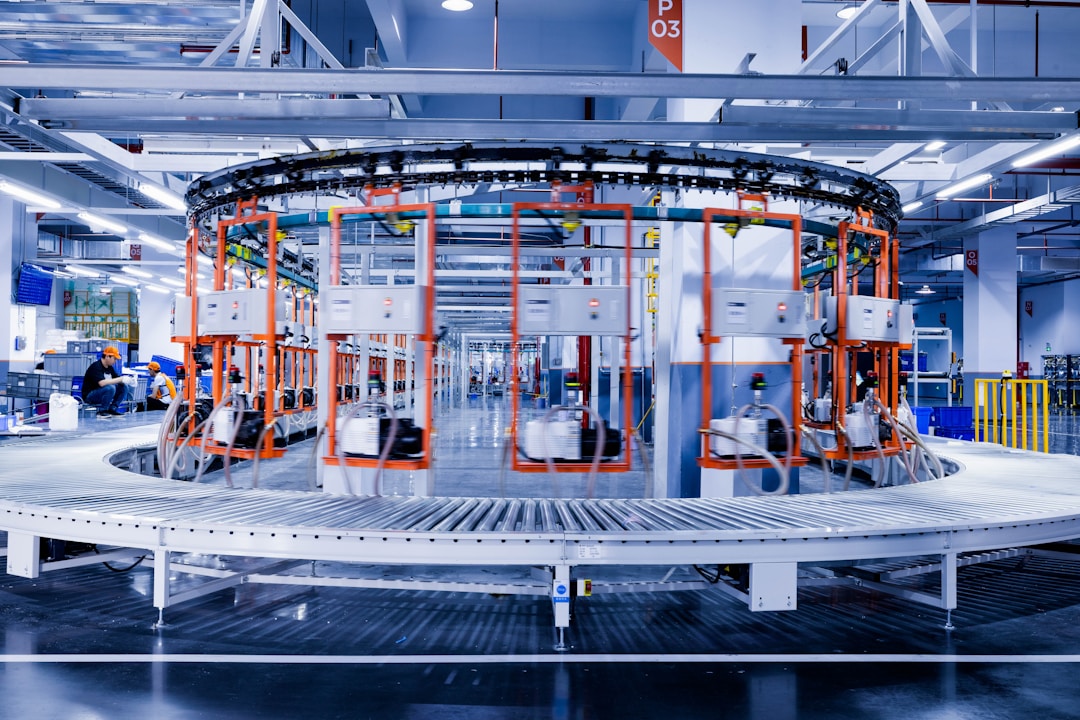

Real-time monitoring of Air Quality is essential to guarantee an optimal production environment in Giga Factories.

Continuous monitoring systems: Sensors such as the SafyrOPC, using NextPM technology, enable continuous monitoring of particle concentrations in the air.

Laboratory analysis: In the event of a pollution peak or unusual event, further laboratory analysis can be carried out to identify the chemical composition of particles and take corrective action.
Biological monitoring: In the event of potential exposure to toxic substances, biological monitoring of workers can be set up to assess the impact on their health and take the necessary measures.

Air Quality Standards in Clean Rooms​​

The ISO 14644 standard defines the classification and requirements for maintaining air cleanliness levels in Clean Rooms. It categorises Clean Rooms based on the maximum allowable concentration of particles of specified sizes. For example, an ISO Class 5 clean room allows no more than 3,520 particles per cubic meter that are 0.5 microns or larger. Deviating from these requirements can lead to product contamination, increased risk of batch failure, and potential regulatory penalties.